



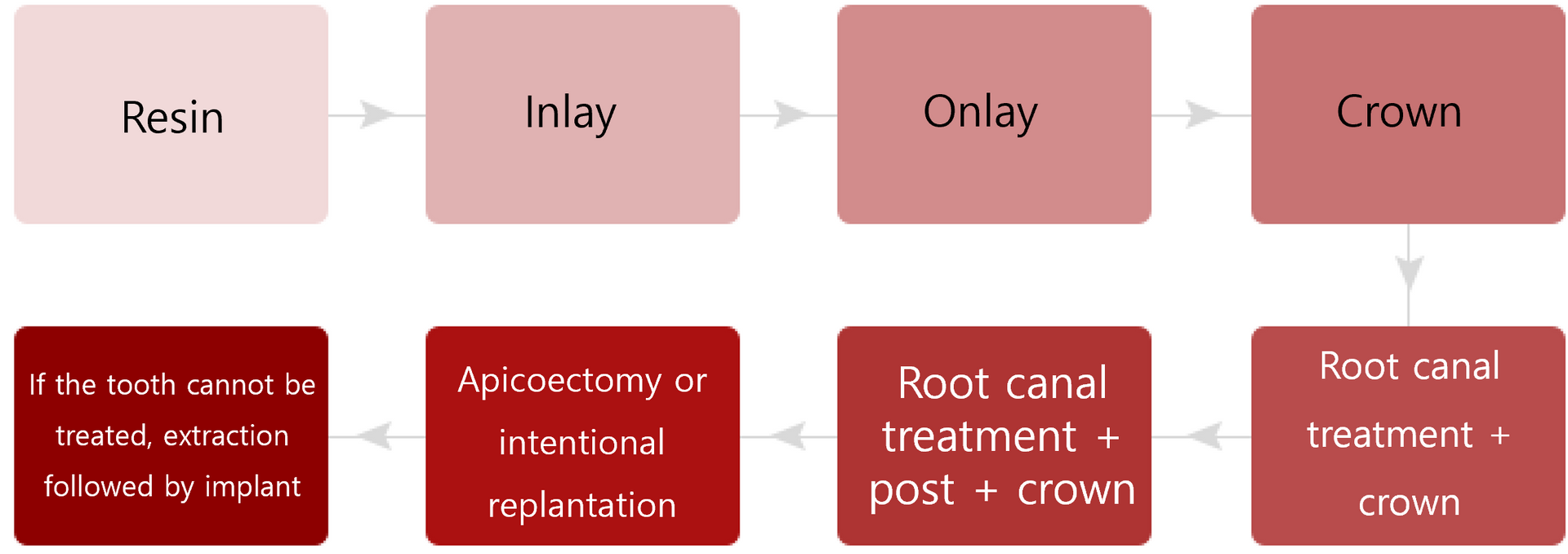
Treatment generally progresses from the least invasive option to the most extensive, depending on the severity of the cavity:
Resin filling → Inlay/Onlay → Crown
Resin
This method involves filling the cavity with resin, a reinforced tooth-colored plastic material,
after removing the decayed tooth structure.
Resin treatment is commonly used for:
• Cavities in the front teeth
• Shallow cavities in molars
• Worn or abraded areas
• Replacing old amalgam fillings with a natural tooth-colored material
It can typically be completed in a single visit and is cost-effective, making it one of the most convenient restorative options.
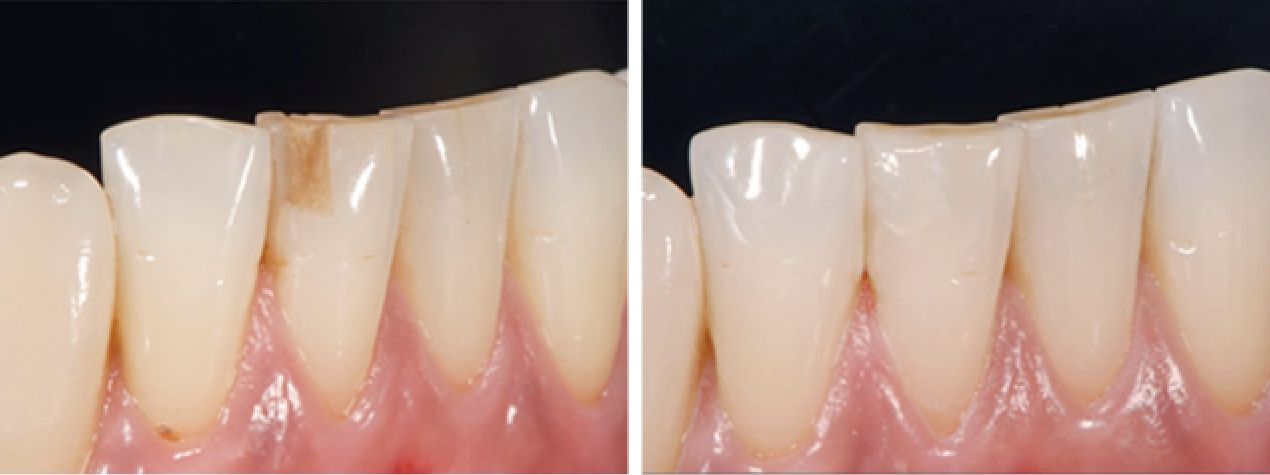
Resin Treatment Before & After
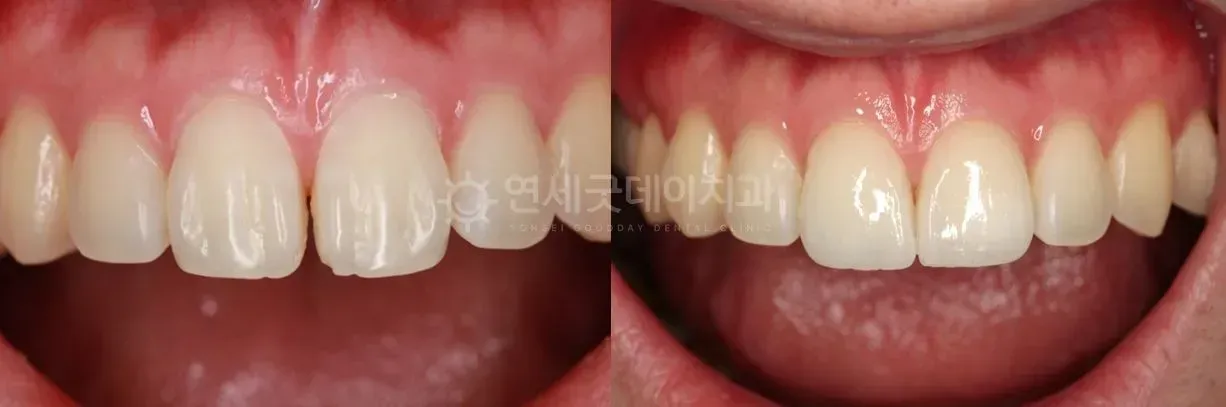
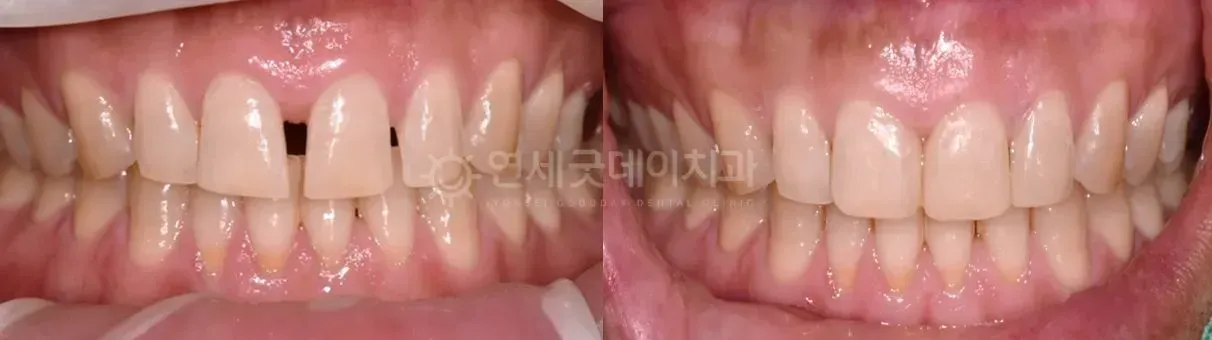
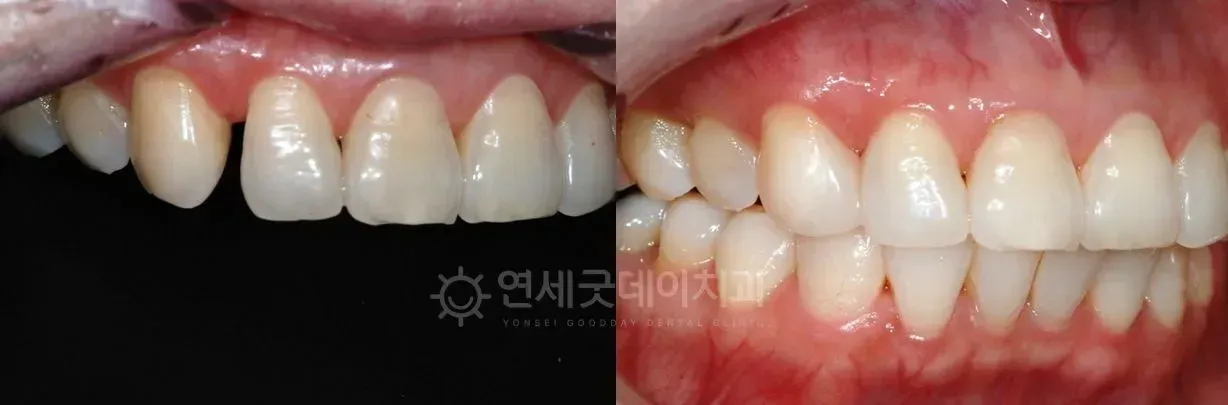
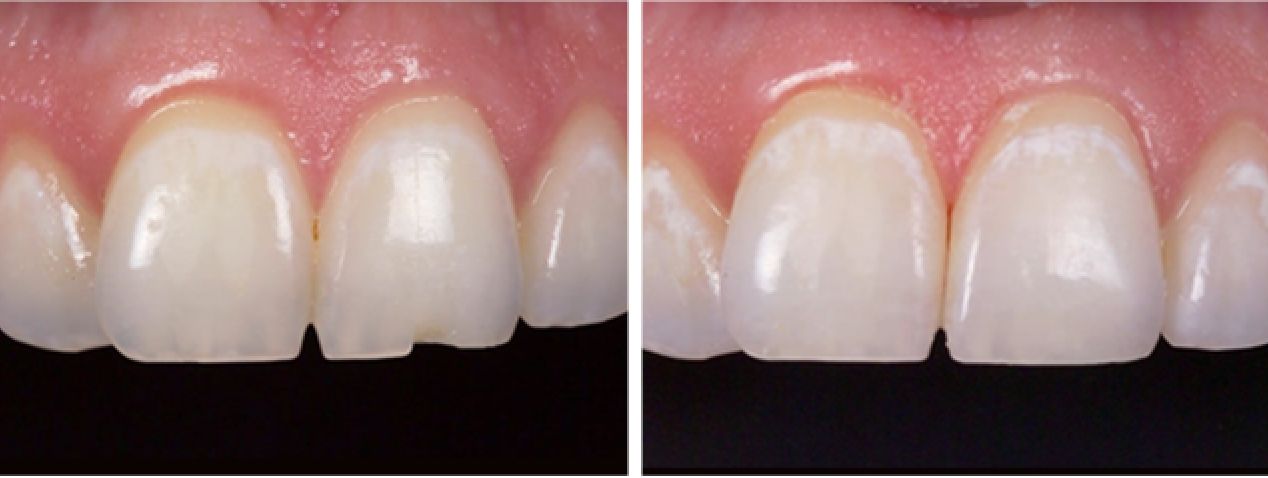
Resin Bonding Treatment Before & After
Inlay / Onlay
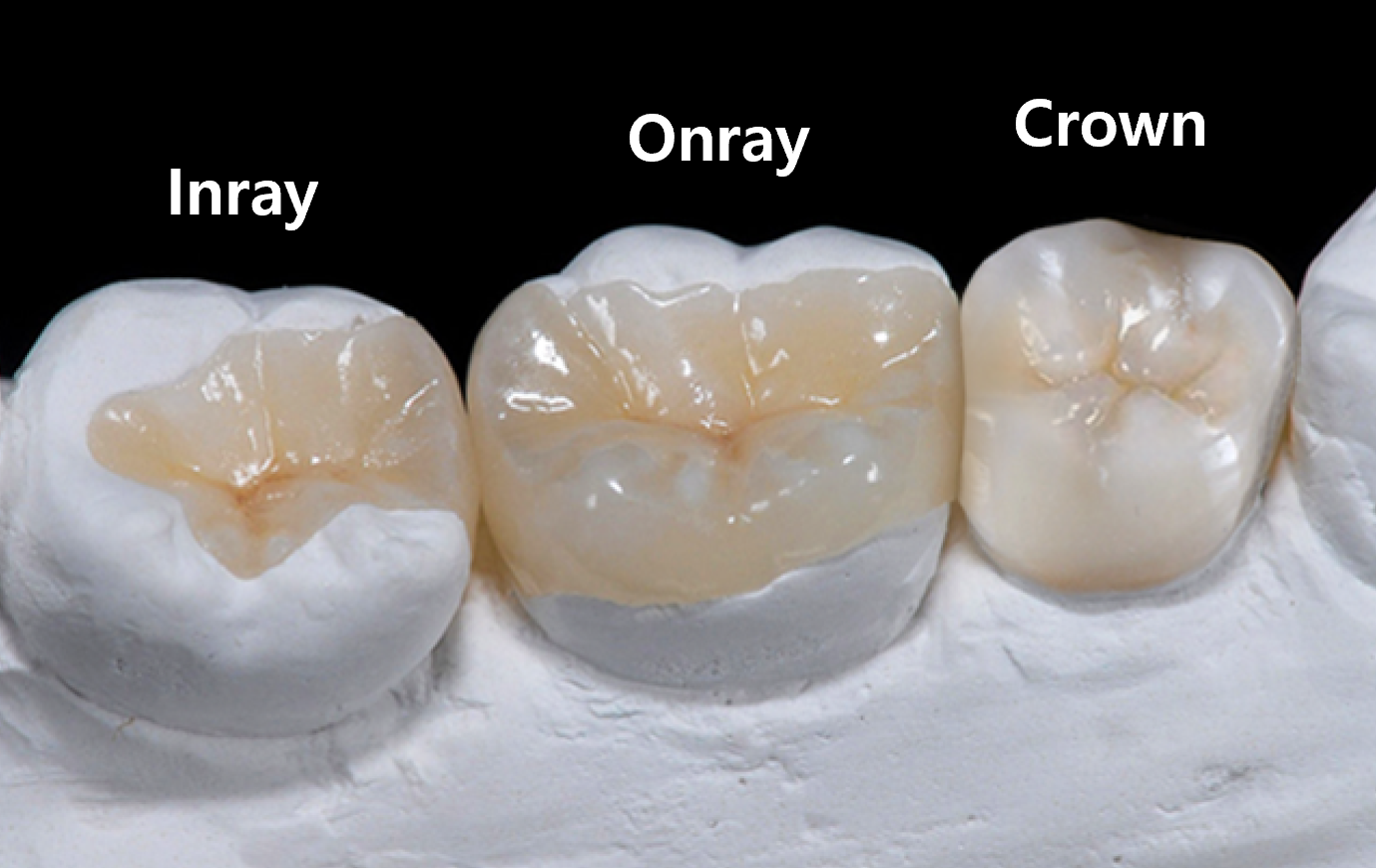
“Inlay” refers to a restoration placed inside the tooth,
while “onlay” refers to one that sits
on the tooth surface.
An inlay is used to restore a relatively small area, whereas an onlay restores a broader surface.
Both are custom-made restorations that are bonded to the area where decay has been removed.
At Yonsei Good Day Dental Clinic, our inlays and onlays are available in ceramic and gold materials.
• Ceramic offers strong bonding strength to the tooth but carries a risk of fracture.
• Gold provides excellent durability but may have weaker bonding compared to ceramic.
For this reason, we recommend the ideal material based on the size and location of the cavity.
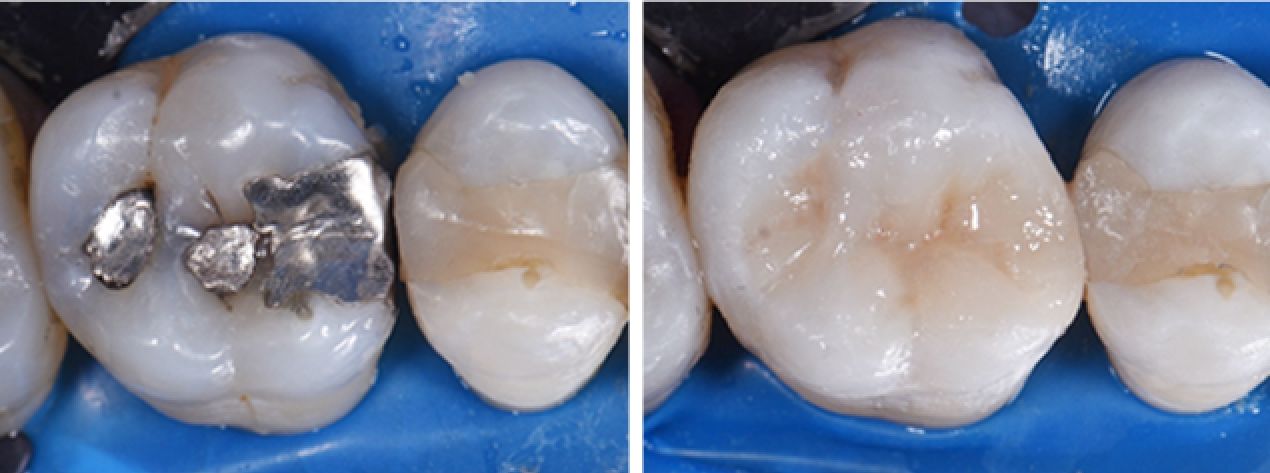
Ceramic Inlay Before & After
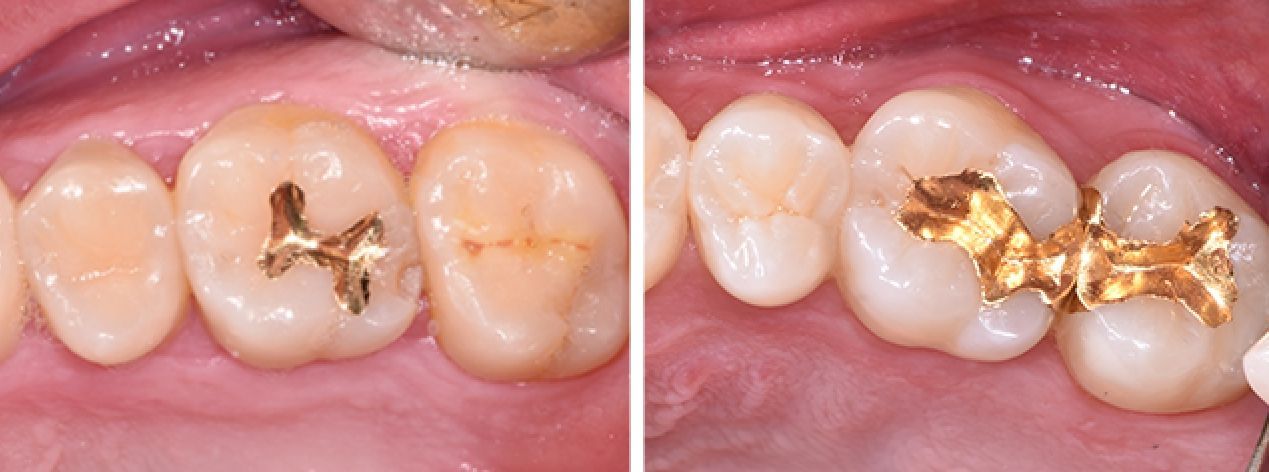
Gold Ceramic Inlay Before & After
Crown
A crown is used when more than 50% of the tooth is broken, worn down, or weakened after root canal treatment.
The crown fully covers the tooth to restore strength and function.
Our clinic offers PFM, zirconia, and gold crowns.
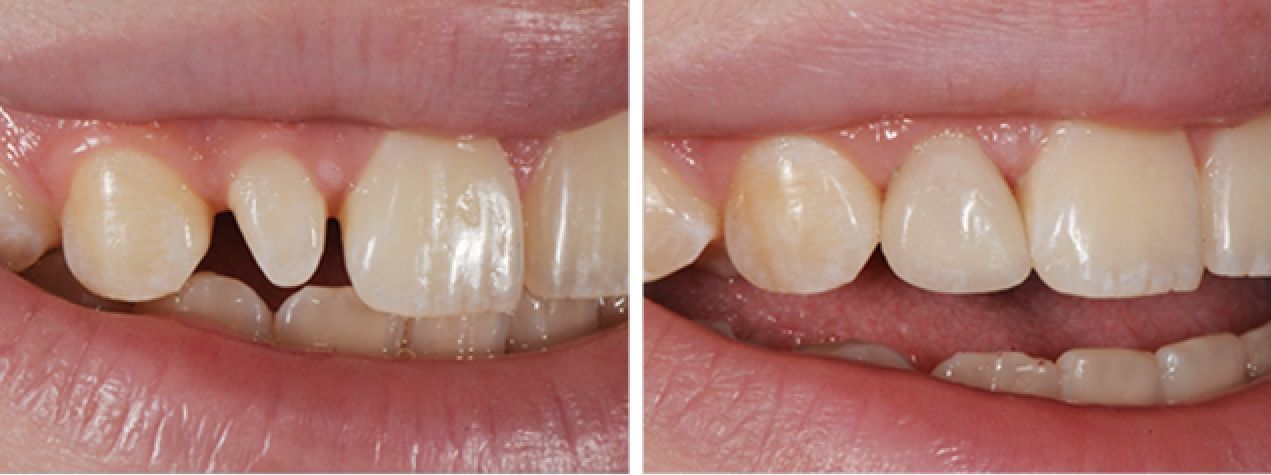
PFM Crown Treatment Before & After
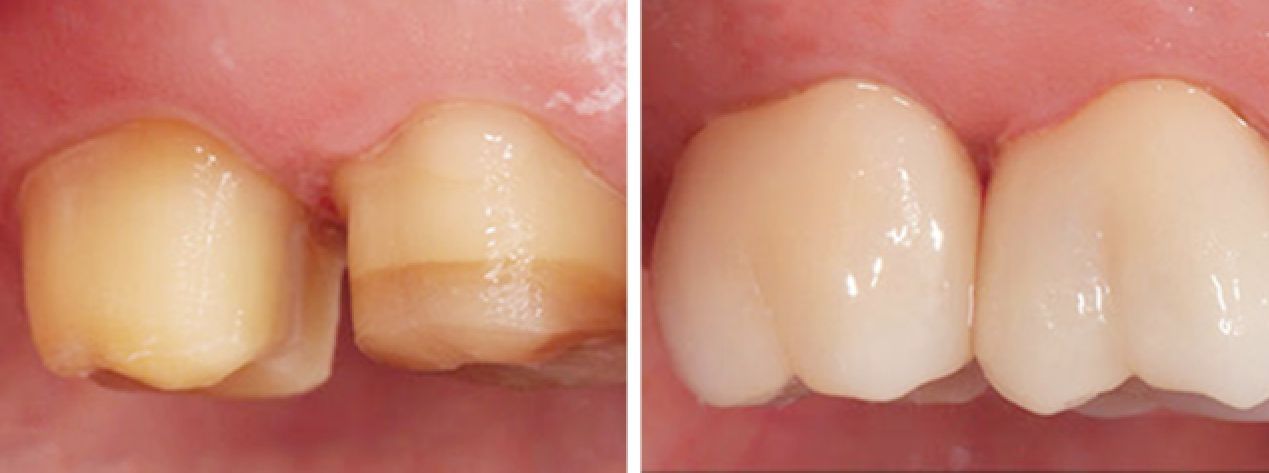
Zirconia Crown Treatment Before & After
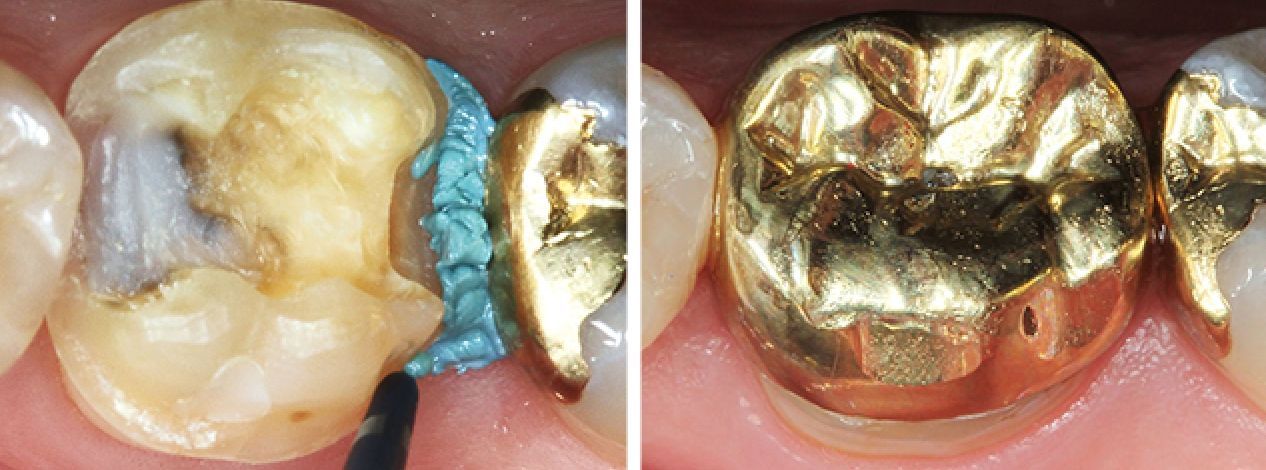
Gold Crown Treatment Before & After

Do I really need a crown after a root canal treatment?
A root canal removes infected tissue and replaces it with a filling material.
Once this is done, the tooth no longer receives nourishment and becomes structurally weak—similar to a dried tree trunk.
To prevent the tooth from cracking or fracturing, it must be protected with a strong crown.
For this reason, we recommend beginning crown treatment immediately after the root canal is completed.
Treatment generally progresses from the least invasive option to the most extensive, depending on the severity of the cavity:
Resin filling → Inlay/Onlay → Crown
Resin
This method involves filling the cavity with resin, a reinforced tooth-colored plastic material,
after removing the decayed tooth structure.
Resin treatment is commonly used for:
• Cavities in the front teeth
• Shallow cavities in molars
• Worn or abraded areas
• Replacing old amalgam fillings with a natural tooth-colored material
It can typically be completed in a single visit and is cost-effective, making it one of the most convenient restorative options.
Resin Treatment Before & After
Resin Bonding Treatment Before & After
Inlay / Onlay
“Inlay” refers to a restoration placed inside the tooth,
while “onlay” refers to one that sits
on the tooth surface.
An inlay is used to restore a relatively small area, whereas an onlay restores a broader surface.
Both are custom-made restorations that are bonded to the area where decay has been removed.
At Yonsei Good Day Dental Clinic, our inlays and onlays are available in ceramic and gold materials.
• Ceramic offers strong bonding strength to the tooth but carries a risk of fracture.
• Gold provides excellent durability but may have weaker bonding compared to ceramic.
For this reason, we recommend the ideal material based on the size and location of the cavity.
Ceramic Inlay Before & After
Gold Ceramic Inlay Before & After
Crown
A crown is used when more than 50% of the tooth is broken, worn down, or weakened after root canal treatment.
The crown fully covers the tooth to restore strength and function.
Our clinic offers PFM, zirconia, and gold crowns.
PFM Crown Treatment Before & After
Zirconia Crown Treatment Before & After
Gold Crown Treatment Before & After
Do I really need a crown after a root canal treatment?
A root canal removes infected tissue and replaces it with a filling material.
Once this is done, the tooth no longer receives nourishment and becomes structurally weak—similar to a dried tree trunk.
To prevent the tooth from cracking or fracturing, it must be protected with a strong crown.
For this reason, we recommend beginning crown treatment immediately after the root canal is completed.